





How To Market A New Land Development In Queensland
An empty lot is the hardest thing in property to sell, because there is nothing to look at. The person deciding is usually somewhere else, looking at it on a phone.
Written by Paul Bosiger, Mission Beach Published 8 min read
To market a new land development, give the buyer something to look at before you ask for anything. Name the estate from its place, show every lot with its boundary traced and a home drawn on it, film the land, ask for one document, then find the people who would move there.
- 01How Do You Market A New Land Development?
- 02Why Is Vacant Land So Hard To Sell?
- 03Does A Land Estate Need Its Own Name?
- 04What Should You Show A Buyer Who Can’t Visit?
- 05Where Do You Find Buyers For Land?
- 06What Does Queensland Law Ask Of Land Advertising?
- 07What Should A Land Buyer Ask For First?
How Do You Market A New Land Development?
Build the picture first: a name drawn from the place, every lot shown with its boundary and a home on it, a film of the land and one document to ask for, then an audience of the people who would move there.
A buyer asked to pay for a block is asked to imagine the rest on their own. The house, the view from the veranda, the drive in on a Friday night.
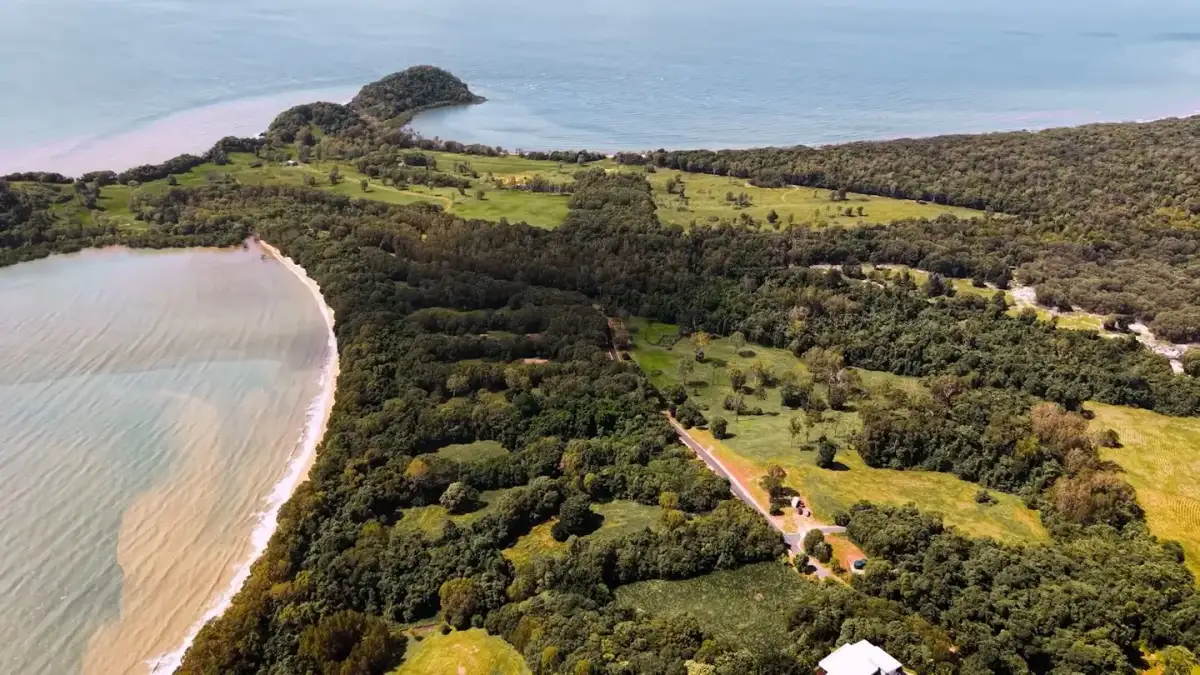
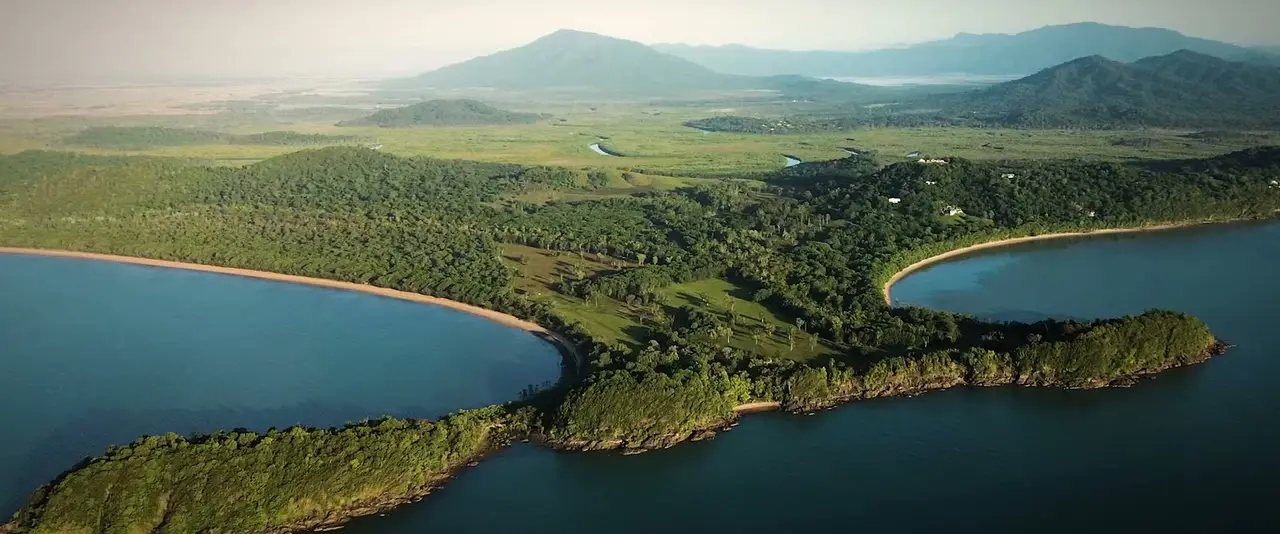
In a regional release the buyer usually isn’t local either. At Headland, twelve titled homesites at South Mission Beach in Far North Queensland, the campaign was aimed at people aged 45 to 65 in Sydney, Melbourne and Brisbane. Every one of them would meet the land on a screen first, a long way from it.
A big estate in the south east sells with display homes, builders’ packages and launch weekends. A dozen lots on the coast have none of that. So the marketing has to carry the whole first impression, and it has to be built before a dollar goes on media.
Why Is Vacant Land So Hard To Sell?
There is nothing to look at, and the research on staging shows buyers find it easier to see a place as their own when a home is shown to them rather than left to the imagination.
In the National Association of Realtors’ 2025 Profile of Home Staging, 83% of buyers’ agents in the US said staging makes it easier for a buyer to picture the property as their own. On the selling side, 30% of agents saw a staged home spend slightly less time on the market, and 19% a lot less.
That research is about houses. We found no published study, in Australia or the US, that measures bare land against land shown with a home on it.
Bare land is the same problem with even less to go on. An empty room still has walls and a window. A cleared lot has grass, a survey peg and a view the buyer has to take on trust.
So we build the picture. Every Headland lot carries a home designed for its orientation, its setback and its outlook, labelled as an indicative visualisation, so the buyer sees a plan rather than a paddock.
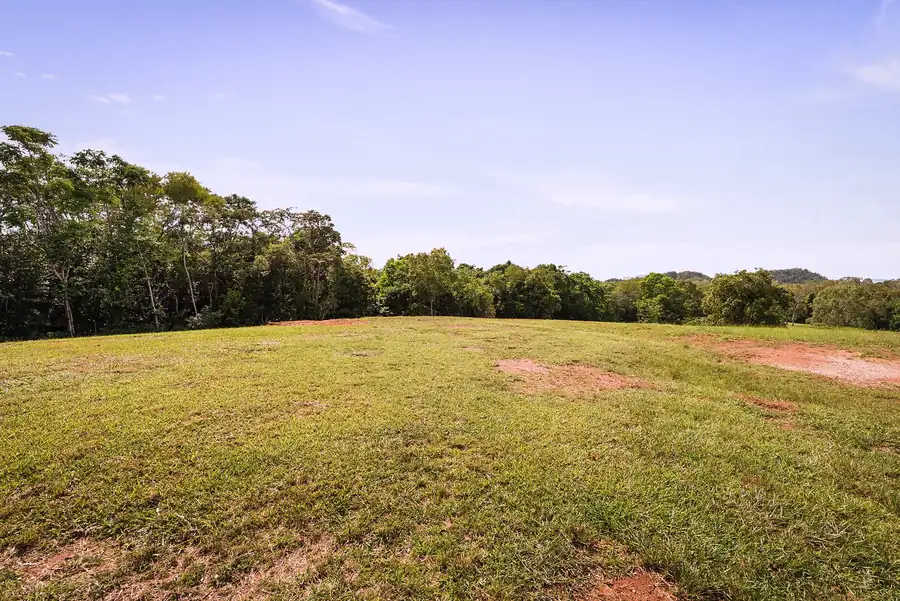
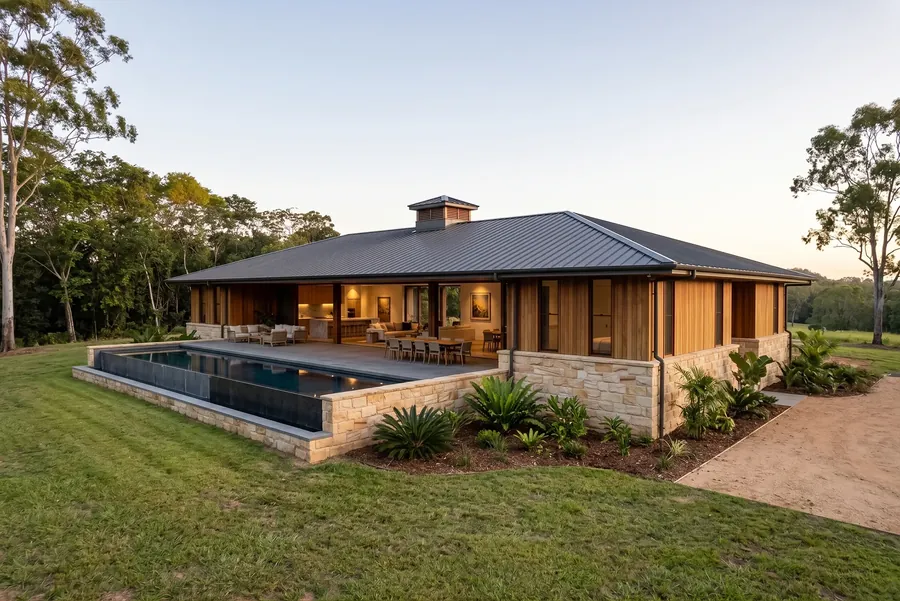
Real pictures still come first. US buyers’ agents rated photographs (73%) and video (48%) as mattering more to their clients than virtual staging (18%), in the same survey. So a rendered home sits beside the aerials and the film, never in their place.
Does A Land Estate Need Its Own Name?
It does when nothing else sets it apart in a portal scroll, and the strongest name comes from something already true about the land.
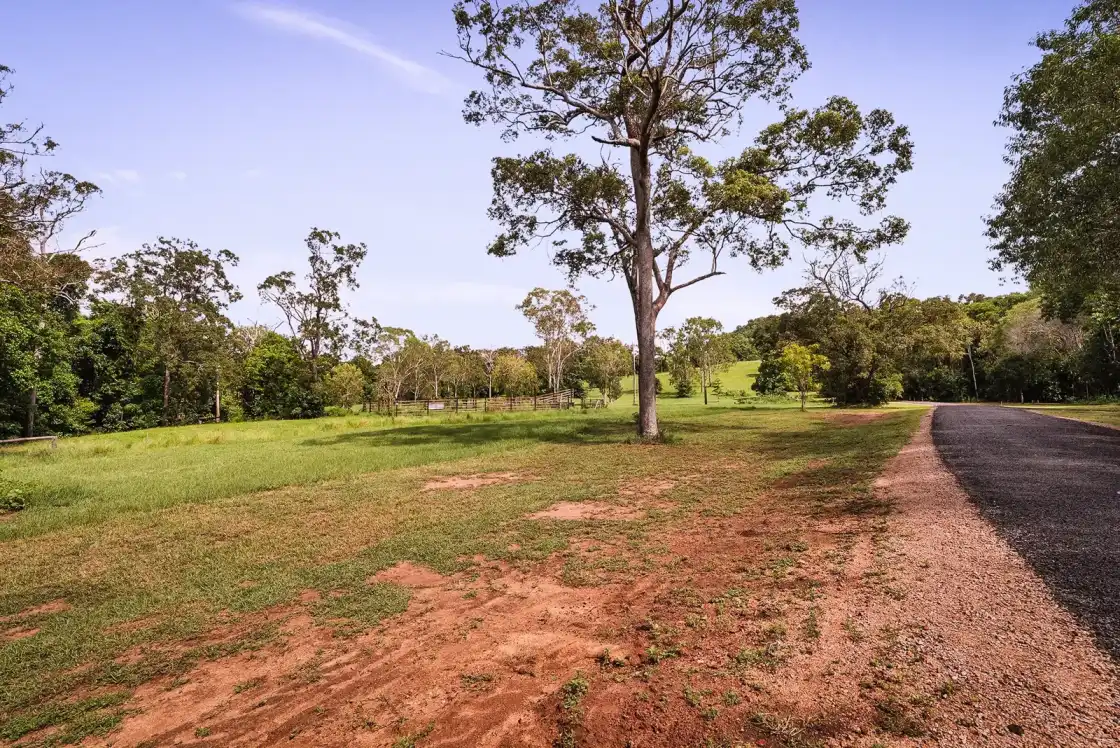
Before the work, Headland was twelve cleared lots at Lugger Bay, freshly titled and already approved, with no name and nothing to say what they were. On a portal that reads as one more listing of vacant land.
The brand was made from the two things that were already true: the place, and the one development approval from Cassowary Coast Regional Council that covers all twelve lots. The approval became the brand’s seal, so every ad, page and document carries it. What one true story did for the estate is told in an earlier entry.
A name gives a buyer something to search for, remember and say to a partner over dinner. Lot 22 on a plan gives them nothing to repeat.
What Should You Show A Buyer Who Can’t Visit?
The land as it is and a home as it could be: the boundary traced on the aerial, a site plan drawn from the survey, a home rendered on the lot and labelled indicative, and a film of the place.
- 01The boundary. Aerials at more than one height, the lot traced and the landmarks labelled, so the buyer knows which trees and which view they are paying for.
- 02The site plan. Drawn from the survey plan and marked indicative, with the area, the frontage and the aspect.
- 03The home. A house rendered onto a photograph of the lot, labelled an indicative visualisation, with a floor plan beside it.
- 04The film. The place from the air and the ground, cut for a phone held upright.
These four are the parts of The Land, the photography and drone film package for land and acreage on our rate card. Each answers a question a buyer would otherwise drive up to ask.
Where Do You Find Buyers For Land?
Buyers for a regional land development are mostly in other cities, so the audience has to be assembled from the people who would move there, because Meta’s Australian targeting has no interest for land buyers.
There is no acreage, no land for sale and no sea change to select in Meta’s Australian targeting. For Headland the audience was built from verified adjacent interests and sized before launch: roughly 2.15 million people across Sydney, Melbourne and Brisbane, aged 45 to 65.
In the first flight two messages ran against each other on near-identical spend, one leading on the council approval and one on the freedom to build. Every lead went straight to the agents. The method is set out on our property developer marketing page.
Over the quarter from 10 July to 9 October 2026 the campaign brought 328 leads at $19.71 each, against a $60 to $90 forecast (FIG. 4). A lead is a person who asked for the memorandum after meeting the land on a screen. What happens next is a conversation with the agents.
Twelve Lots, Three Months
What the Headland campaign recorded in Meta Ads Manager over its quarter, read live from the sealed account.
Source: Meta Ads Manager, three months, sealed 9 October 2026What Does Queensland Law Ask Of Land Advertising?
That nothing in it misleads: a false or misleading representation about the sale of land is an offence under the Australian Consumer Law, and the seller owes the buyer a disclosure statement before a contract is signed.
Queensland Fair Trading’s guidance on property advertising is plain about price. An offers-over figure should be the least the seller will accept, and advertising a price the seller won’t sell for is bait advertising.
A Queensland seller must also give the buyer a Seller Disclosure Statement, Form 2, before the contract is signed. The seller’s agent and solicitor carry that part.
The marketing carries the pictures. A home drawn on a lot is a representation of something that isn’t there yet, so every one we make is labelled an indicative AI visualisation, and every site plan is marked indicative.
What Should A Land Buyer Ask For First?
One document: every lot page at Headland asks for the Information Memorandum and nothing else, so every request takes the same path to the agents.
The memorandum treats the land as a design opportunity rather than a listing: the place, the approval, every lot with its area and its plan. A request lands it in the buyer’s inbox within minutes, and the agents see who asked.
Until 2 November the lot pages also offered a brief for each lot. Now there is one ask on every page, and one path behind it.
Nobody buys a block they cannot picture, so build the picture first. A land development that is new to market starts with its name and its identity, and that is what the Brand Guide sets down.
The Brand Guide is $1,500 and takes two weeks.
01What is the best way to sell land?
Show it. Trace the boundary on an aerial, film the place and draw a home on the lot, marked as an artist’s impression. Then put it in front of the people who would live there, with the agent handling the sale.
02How do I promote my property?
Start with what a buyer needs to see: real photographs, a floor or site plan and a short film cut for a phone. Then list it where buyers search and advertise it to the people most likely to want it.
03What is the role of marketing in real estate?
To give a buyer enough to picture the place before they visit, and a reason to ask for more. For land it carries more of the load, because there is no house to walk through.
04What is a land developer?
A person or company that takes a parcel of land through planning approval, puts in roads and services and divides it into lots for sale. Some build homes on the lots. Many sell the land and leave the house to the buyer.
What This Is Built On
- The serviceProperty developer marketing, Queensland→
- The proofHeadland, twelve homesites at Mission Beach→
- The groundMarketing in Far North Queensland→
- The next stepThe Brand Guide, $1,500, two weeks→
Written by Paul BosigerYKC AgencyMission Beach№ 0006